

Wi-Fi QR Code Generator
Create a Wi-Fi QR code so guests, customers, or visitors can join your network without typing the network name or password by hand. They only need to scan the code with their phone camera and confirm the connection.
It works well at home, in offices, cafes, hotels, coworking spaces, rentals, events, and anywhere you need to share Wi-Fi access quickly.
What is a Wi-Fi QR code?
A Wi-Fi QR code is a QR code that stores the connection details for a wireless network: the network name, password, security type, and, when needed, whether the network is hidden.
Unlike a link QR code, a Wi-Fi QR code does not open a web page. It gives the phone the details it needs to connect to a specific network. That means the user does not have to search for the SSID in the network list or enter the password manually.
How Wi-Fi connection through a QR code works
The user opens the phone camera or a QR scanner and points it at the code. The phone recognizes the Wi-Fi data and shows a system prompt to join the network.
The usual flow looks like this:
- The person scans the QR code.
- The phone reads the network name, security type, and password.
- A join network prompt appears on the screen.
- After confirmation, the phone connects to Wi-Fi.
An internet connection is not required just to scan the code. To open websites, messengers, or apps after connecting, the Wi-Fi network itself must have internet access.
Where to use a Wi-Fi QR code
A Wi-Fi QR code is useful wherever people often ask for the password or need to get online without friction.
At home
Place the QR code in the hallway, on the fridge, or near a workspace. Guests can connect on their own without asking for the password or typing it in.
For cafes and restaurants
Add the code to a menu, table tent, receipt, or table sticker. It cuts down repeated questions for staff and makes Wi-Fi access easier for visitors.
For hotels and rentals
Put the QR code in the room, at reception, or in the guest instructions. This is especially helpful when the password is long or uses mixed characters.
For offices and coworking spaces
Use a QR code for the guest network so partners, clients, candidates, or contractors can connect quickly without access to your main internal network.
For events and conferences
At events, a QR code helps avoid queues and repeated explanations. Place it on badges, stands, screens, or information signs.
Benefits of using a QR code for Wi-Fi access
Fewer connection mistakes
Users do not need to type a long password, switch keyboard layouts, or check uppercase and lowercase letters.
Faster access
Scanning takes only a few seconds. It is convenient for one guest at home and for dozens of visitors in a public space.
Fewer repeated questions for staff
In a cafe, hotel, office, or coworking space, a QR code reduces the constant "what is the Wi-Fi password?" requests.
Useful for guest networks
A QR code is a practical way to share a separate guest network while keeping your main network private.
Easy to print and display
You can place the code on a sticker, menu, sign, leaflet, information sheet, or screen. Before printing a large batch, test it on real devices.
What to check before printing or publishing
Use a guest network
If the QR code will be displayed in a public place, create a separate guest network. Avoid publishing a QR code for your main home or business network.
Remember that the password is inside the code
A Wi-Fi QR code makes joining easier, but it does not make the password invisible. The password is part of the encoded data, and a compatible scanner or decoder can reveal it.
Create a new code after changing the password
A static QR code contains the exact network settings used when it was created. If you change the SSID, password, or security type, generate a new QR code.
Check size and contrast
For print, use a readable size, strong contrast, and avoid very glossy surfaces. Glare, low print quality, or a code that is too small can make scanning unreliable.
Test before using it
Before printing a code for a cafe, hotel, office, or event, test it on several phones. This helps catch mistakes in the password, security type, or hidden network setting.
Common mistakes and limitations
A Wi-Fi QR code passes connection details to a device, but it does not solve every network issue.
It does not increase internet speed, replace router settings, or bypass an additional login page. If your network uses a captive portal, such as a page for accepting access terms, users may still need to complete that step after connecting.
The most common reasons a code does not connect to Wi-Fi are:
- the network name was entered incorrectly;
- the password contains a typo;
- the wrong security type was selected;
- the network is hidden, but the hidden network option was not enabled;
- the phone is old and does not support automatic Wi-Fi QR connection;
- the network name or password uses special characters - test the code on a real device before printing.
If the code scans but the connection fails, review the entered details and create the QR code again.
Frequently Asked Questions
What does a Wi-Fi QR code store?
It stores the network name, security type, password, and, if needed, the hidden network setting.
Do you need internet to scan a Wi-Fi QR code?
No. Scanning works without internet. The Wi-Fi network itself needs internet access only if users want to open websites and apps after connecting.
Is the password visible in a Wi-Fi QR code?
Yes. The password is included in the encoded data. A phone camera may only show a join prompt, but a dedicated decoder can display the password.
Does a Wi-Fi QR code work on iPhone?
Yes. Modern iPhones can scan Wi-Fi QR codes with the Camera app or Code Scanner. Older devices may have limitations.
Does a Wi-Fi QR code work on Android?
Yes. Most modern Android phones support Wi-Fi connection through a QR code. Older models may require a separate scanner app.
Can I create a QR code for a hidden Wi-Fi network?
Yes. When creating the code, mark the network as hidden. Otherwise, the phone may not find it automatically.
Can I make a Wi-Fi QR code without a password?
Yes. If the network is open, choose the no-password option and leave the password field empty.
Is it safe to display a Wi-Fi QR code in a cafe or hotel?
Yes, if it connects to a separate guest network. Avoid publicly displaying a code for the main network that contains private or work devices.
Why does the QR code scan but the phone does not connect?
The usual cause is an error in the SSID, password, security type, or hidden network setting. Check the details and generate the code again.
What should I do after changing the Wi-Fi password?
Create a new QR code. The old code still contains the previous password and will no longer connect users to the network.
📘 Useful articles from our blog
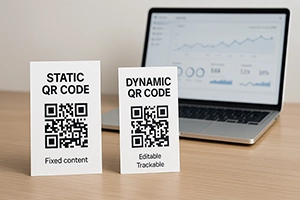
Explaining the advantages of dynamic codes: editing, analytics, security, and scalability for business.
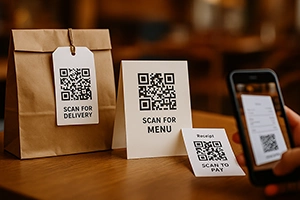
Menus, reservations, feedback, and payments — how to integrate QR in HoReCa and improve service.

Brand colors, logos, fonts — how to create not just a QR, but a visually matched brand element.