

Static UPI QR Code Generator for INR Payments
Generate a static UPI QR code for INR payments in a few simple steps. It is a practical option for stores, checkout counters, invoices, printed materials, payment pages, and recurring payment flows where customers need a direct way to pay.
This generator helps you create a reusable UPI QR code that works well both online and offline. Add it to a website, share it on social media, place it on packaging, include it in invoices, or print it for a point-of-sale location.
Why this UPI QR generator is useful
This page is focused on UPI payments, not on every possible type of QR code. The goal is to keep the process clear and quick for someone who does not want to study long instructions and simply needs a payment-ready QR code.
A static UPI QR code can be scanned again and again, which makes it useful for businesses, sellers, freelancers, and services that need a stable payment code. You can lock in a specific amount when needed, or leave the amount open so the payer enters it in their UPI app.
What is a static UPI QR code and why does it matter?
A static UPI QR code acts like a persistent payment marker for your bank account. Technically, it is a visual representation of your Virtual Payment Address, or VPA, which usually stays the same while your account remains active. Once the code is generated and printed, it can continue to serve customers for months or even years without software maintenance.
Unlike dynamic payment setups that require API integration and a fresh code for each purchase, a static format is useful in two common cases:
- - Open amount mode: Create a flexible code and let the customer enter the payable amount in their UPI app. This works well for street vendors, small cafes, tips, donations, and other cases where the final amount is not known in advance.
- - Fixed payment: Add the price of a specific product or service directly to the code. This speeds up checkout and reduces manual input because the customer only needs to review the details and confirm the payment.
The benefit becomes especially clear when every extra step affects completion: paying an invoice from a phone, making a quick donation, settling a bill in person, or paying after receiving a document or message.
Technical compatibility with UPI standards
The QR code is created in a format intended for standard UPI payment flows and compatible UPI apps. Interoperability is one of the key strengths of UPI: the customer does not need to use the same bank or app as the payee. In most everyday payment scenarios, a compatible UPI app can read the code and open the payment screen.
Which UPI apps usually work with this QR code?
UPI is supported by many banks and payment services in India. Common examples include:
- Popular UPI apps such as Google Pay, PhonePe, Paytm, BHIM, Amazon Pay, and bank apps with UPI support.
- Paytm: A broad payment ecosystem that can support payments from bank accounts and supported wallets through a QR flow.
- BHIM and Amazon Pay: Widely used options for customers who prefer government-backed or large consumer payment platforms.
- Banking apps: Mobile apps from banks such as HDFC Bank, ICICI Bank, SBI YONO, and Axis Bank commonly include UPI scanning features.
The code contains the core payment parameters needed for a standard UPI payment. Depending on the fields you provide, it can also pass helpful context that makes the payment easier for both the payer and the recipient to verify.
Transaction limits: What businesses should keep in mind
UPI is a powerful payment method, but it still has limits designed for security and fraud prevention. Knowing these boundaries helps reduce failed payments during busy or high-value moments.
- Daily limits: Actual UPI transfer limits may depend on the bank, account type, app, and payment category. These limits affect many standard user accounts.
- Bank-specific rules: Some banks may apply stricter limits based on the account profile, risk controls, or customer history.
- Merchant accounts: If your UPI ID is registered for business use, higher limits may be available for some payment categories. They are not universal, so the exact conditions should be checked with the bank or payment provider.
- Number of transactions: The allowed transaction count can also vary by bank and app. This matters if a personal account is being used for frequent sales.
For microbusinesses, one of UPI's biggest advantages is that it works well for small payments. That makes it useful for low-value transactions where traditional card acquiring may be less convenient or more expensive.
Use cases: Practical ideas for different niches
Because a static QR code is easy to reuse, it can fit many business formats:
1. Retail and local services
Do not limit the code to a single sticker near the cash register. Place it on cafe tables, near the entrance, at service desks, or on product packaging. A framed print with a logo can make the payment point look more professional and easier for customers to notice.
2. Freelance work and digital invoices
For remote work, a static UPI QR code can replace long bank details in invoices and email payment requests. A client can open the invoice on a computer and scan the code with a phone, which reduces friction and helps payments happen faster.
3. Delivery and field payments
Couriers and field staff can carry a laminated QR card instead of relying only on bulky POS terminals. On-site UPI payment can simplify settlement, reduce hardware dependency, and help funds reach the business account quickly.
Security: Why QR payments reduce manual entry risk
Payment data should be handled carefully. This generator creates the QR code locally in the browser, so the entered payment details are not sent to the server for QR generation.
A QR code can be safer than typing payment details manually for several reasons:
- Error prevention: Manual entry can lead to a wrong phone number, UPI ID, or payment detail. Scanning a QR code reduces the chance of sending money to the wrong recipient because the details are already encoded.
- No payment processing by this page: The tool only creates a visual instruction for a compatible UPI app. The actual payment is initiated and confirmed by the payer in their own banking or payment app.
- Final review: Before entering a PIN, the customer can review the payee name or business name shown in the app, which adds one more verification step before confirmation.
Frequently Asked Questions
What can a static UPI QR code be used for?
It is useful for stores, checkout counters, invoices, printed materials, payment pages, and other cases where you need a reusable QR code for collecting payments.
Can I set a fixed amount?
Yes. If the QR code is meant for a specific price, you can include the amount in advance. This is useful for fixed-price products or services.
Can the amount be left open?
Yes. In that case, the payer enters the amount during payment. This is convenient when one QR code is used repeatedly for different totals.
Which currency does this generator use?
This page is intended for UPI QR codes used with payments in Indian rupees, INR.
Can I print the UPI QR code?
Yes. The generated code can be used on printed signs, posters, menus, invoices, stickers, and other offline materials.
Does this page process the payment?
No. This page helps create the payment QR code. The actual payment is completed by the user in a compatible UPI app.
📘 Useful articles from our blog

Real-life examples of using QR code analytics in business: what to measure, how to integrate, and why it provides an advantage.
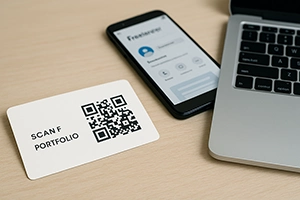
Digital business card, landing page, resume — how freelancers can share information quickly via scan.

Benefits of QR in email campaigns: how to make website or offer access even easier from mobile.