Online QR code scanner: Scan with a camera, photo, or screenshot
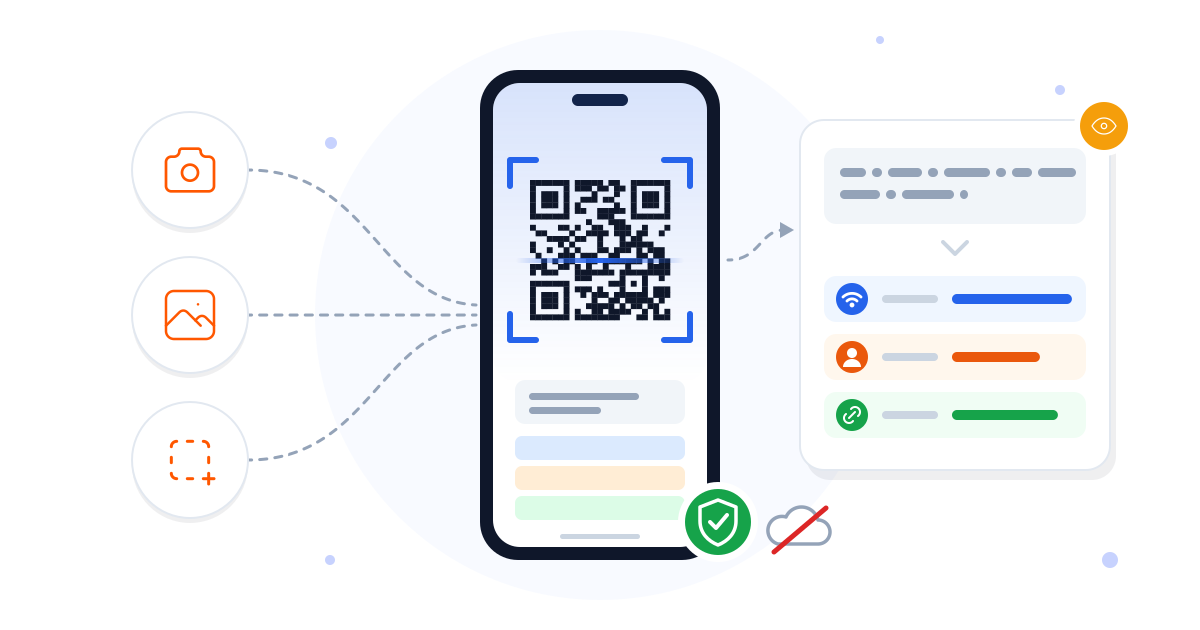
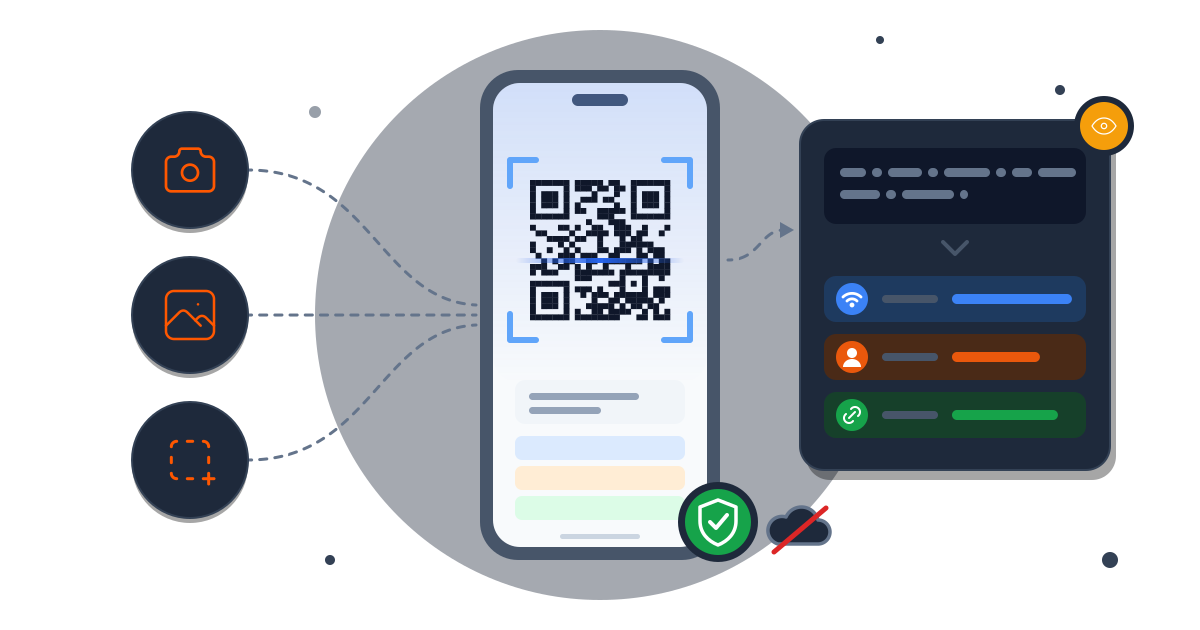
Point your phone or computer camera at a QR code, or upload an image containing one, to see its contents right in your browser. No app installation or registration is required, and recognition happens locally on your device.
Works on phones and computers • Free • No data is stored
How to scan a QR code online
- Click “Scan with Camera” or “Upload Photo.”
- Allow your browser to access the camera, or choose an image containing a QR code.
- Wait for the scanner to recognize the code.
- Review the result: The code's contents appear as text. Links, Wi-Fi details, contacts, SMS messages, events, and other common data types also appear in an easy-to-read table.
- Copy the data you need. The scanner doesn't open anything automatically—you decide whether to follow a link.
💡 Tip: For an accurate scan, keep the QR code in focus, avoid glare, and make sure the entire code is in the frame.
Ways to scan a QR code: Camera, photo, or screenshot
Scan with your camera
Use this option when the QR code is in front of you: on paper, packaging, a menu, a ticket, a storefront window, promotional material, or another device's screen. Click “Scan with Camera,” allow camera access, and position the camera so the entire code is in the frame. Once the code is recognized, the result will appear on the page.
Read a QR code from a photo
Use this option when an image containing the QR code is already saved on your phone or computer. Click “Upload Photo” and choose a file. You can use image formats supported by your browser, such as JPG, PNG, or WebP. There's no need to shrink large photos yourself: The scanner automatically resizes the image, tries to recognize the code at several sizes, and accounts for the photo's orientation.
Scan a QR code from a screenshot
A common situation: Someone sends you a QR code in a messaging app or email, or you find one in a PDF, on a website, or in an app. It's already on the same phone's screen, so you can't point that phone's camera at it. Take a screenshot and upload it using “Upload Photo.”
What to do if the camera won't turn on
If no camera feed appears after you click “Scan with Camera,” camera access is most likely blocked in your browser. Here's how to fix it:
- iPhone / iPad (Safari): Open your device's Settings → Safari → Camera and select “Allow.” Also check the “aA” icon on the left side of the address bar: Camera access must be allowed in the website settings.
- Android (Google Chrome): Tap the icon to the left of the website address → “Permissions” → enable “Camera.” If the option is disabled, check your phone's settings to make sure the browser itself has camera permission.
- Computer (Windows / macOS): Click “Allow” when the browser asks for permission. If you previously blocked access, click the icon to the left of the website address, enable the camera in the permissions, and reload the page. If multiple cameras are connected, check which one is selected in the website settings. On macOS, the browser must also have camera access in the system's privacy settings.
If permission is granted but the camera still doesn't work:
- Another app is using the camera—for example, a video call or another tab. Close it and reload the page.
- The page is open in a messaging or social media app's built-in browser. These browsers may not allow camera access. Open the page in Safari, Chrome, or another standard browser.
Alternatively, take a picture of the QR code with your phone's regular camera app and upload it using “Upload Photo.”
What the scanner shows after reading a code
The scanner reads standard QR codes regardless of which service created them. The result has two parts:
- A text field containing the code's contents. For every code type, this field always shows the data exactly as it was encoded.
- A table with a breakdown of the data. If the scanner identifies the data type, the same information appears below the text field in a readable format.
For example, a Wi-Fi QR code contains a string such as WIFI:T:WPA;S:MyNetwork;P:mypassword;;. The scanner shows it in the text field and lists the network name (SSID), encryption type, and password separately in the table. For an SMS QR code, the table shows the phone number and message text.
Data types recognized automatically
- links (URLs);
- phone numbers;
- email;
- SMS;
- Wi-Fi;
- contacts in vCard or MeCard format;
- calendar events;
- geolocation (coordinates);
- cryptocurrency payments;
- JSON data;
- plain text.
If a QR code is read but its data format isn't on this list, its contents will still appear in the text field—just without a table.
The scanner only displays data: It doesn't connect your device to Wi-Fi, save contacts, send SMS messages, make payments, or redirect you to a website. Copy what you need and use it however you prefer.
Create the type of QR code you need
Below are generators for the most common types, as well as for phone calls, email, and plain text.


Why you see a short link after scanning
A dynamic QR code usually contains a short link that redirects to the destination, rather than the destination page's address itself. This lets the code's owner change the destination without reprinting the QR code. The scanner doesn't follow the link, so it shows that short link—for example, one on qri.li or on a company subdomain configured for its QR codes. You'll only see the final address if you open the link.
Learn more about how this works on the Dynamic QR Codes page.
Staying safe when scanning QR codes
A QR code can contain useful information, but it can also link to a fraudulent website. Check the result before opening a link or entering personal information.
The scanner displays the QR code's contents without redirecting you anywhere, so you can review the result first and then decide what to do next.
How to open QR code links safely
- Check the domain before opening the link: Look for substituted letters and unfamiliar addresses.
- Don't enter passwords, verification codes, or bank card details on suspicious websites.
- Be careful with QR codes on stickers, parking meters, terminals, posters, and unfamiliar promotional materials—fake codes may have been placed over the real ones.
- Only open a shortened link if you trust the source.
- For Wi-Fi QR codes, check the network name before connecting.
- For payment QR codes, check the recipient and amount in your banking app before confirming.
- If the result is unclear or looks suspicious, don't open it.
Learn more about common scams in the article “Are QR codes safe? How to avoid scams and phishing” .
What happens to photos and the camera feed
Scanning happens locally in your browser. Photos, screenshots, and the camera's video feed aren't sent to a server for processing. Camera access is used only while scanning.
Tips for reliable QR code scanning
Follow a few simple guidelines to help the scanner recognize QR codes faster:
- Keep the code in focus. The camera needs a clear, sharp view of the QR code.
- Keep the entire code in the frame. Don't crop the corners, and leave a clear, light-colored margin around the code.
- Avoid glare. Glossy paper, screens, or bright light can interfere with recognition.
- Check the contrast. Dark codes on light backgrounds are easiest to read. The scanner also tries to recognize inverted codes—light codes on dark backgrounds.
- Hold the camera steady. Wait 1–2 seconds for the camera to focus.
- Use your phone's main camera for small QR codes.
- Crop out unnecessary parts of the image. If the QR code takes up only a small part of a large photo or screenshot, crop the image so the code fills most of the frame.
- Keep only one code in the image. The scanner recognizes one QR code per image, so use a separate photo or cropped section for each code.
- If the code is damaged, try another copy or ask the sender for the original image.
For more on common mistakes when creating QR codes, see our separate blog post.
Frequently asked questions
Do I need to install an app to scan QR codes?
No. The online scanner works right in your browser—just allow camera access or choose an image from your device.
Can I read a QR code from a photo or screenshot?
Yes. Click “Upload Photo” and choose an image in a format your browser supports, such as JPG, PNG, or WebP. This is also the easiest way to read a code displayed on your own phone's screen: Take a screenshot and upload it.
Does the scanner open links automatically?
No. The scanner only shows the code's contents—a link, Wi-Fi details, a contact, or other text. You decide whether to open a link or use the data.
Are uploaded photos stored?
No. Images are processed locally in your browser and aren't sent to a server.
Why isn't the code being recognized?
Check the lighting, contrast, and image quality. If the code is damaged, very small, or takes up only a small part of the frame, the scanner may not recognize it. You'll find helpful advice in the “Tips for reliable scanning” section.
What if there are multiple QR codes in one image?
The scanner recognizes one code per image. To read the others, crop the photo so only the code you want remains, then upload each section separately.
Does the scanner work on iPhone and Android?
Yes, the scanner works in modern browsers, including Safari, Chrome, and Firefox. You can use it on both phones and computers.
Is it safe to open links from QR codes?
That depends on the source of the code. Before opening a link, check the domain shown by the scanner. If the domain is unfamiliar or looks suspicious, don't open the link or enter personal information.
Why does the scanner show a short link instead of the website address?
It's probably a dynamic QR code: It contains a short link that redirects to the final destination page. Only open that link if you trust the source of the code.
Can I use the scanner offline?
Yes. Images aren't sent to a server, so you can scan without an internet connection if the page is already open or your browser has cached it. If the page didn't load completely, reopen it when you have a connection.
Should I use the front or rear camera?
The main rear camera is recommended: It focuses better and recognizes small QR codes more accurately.