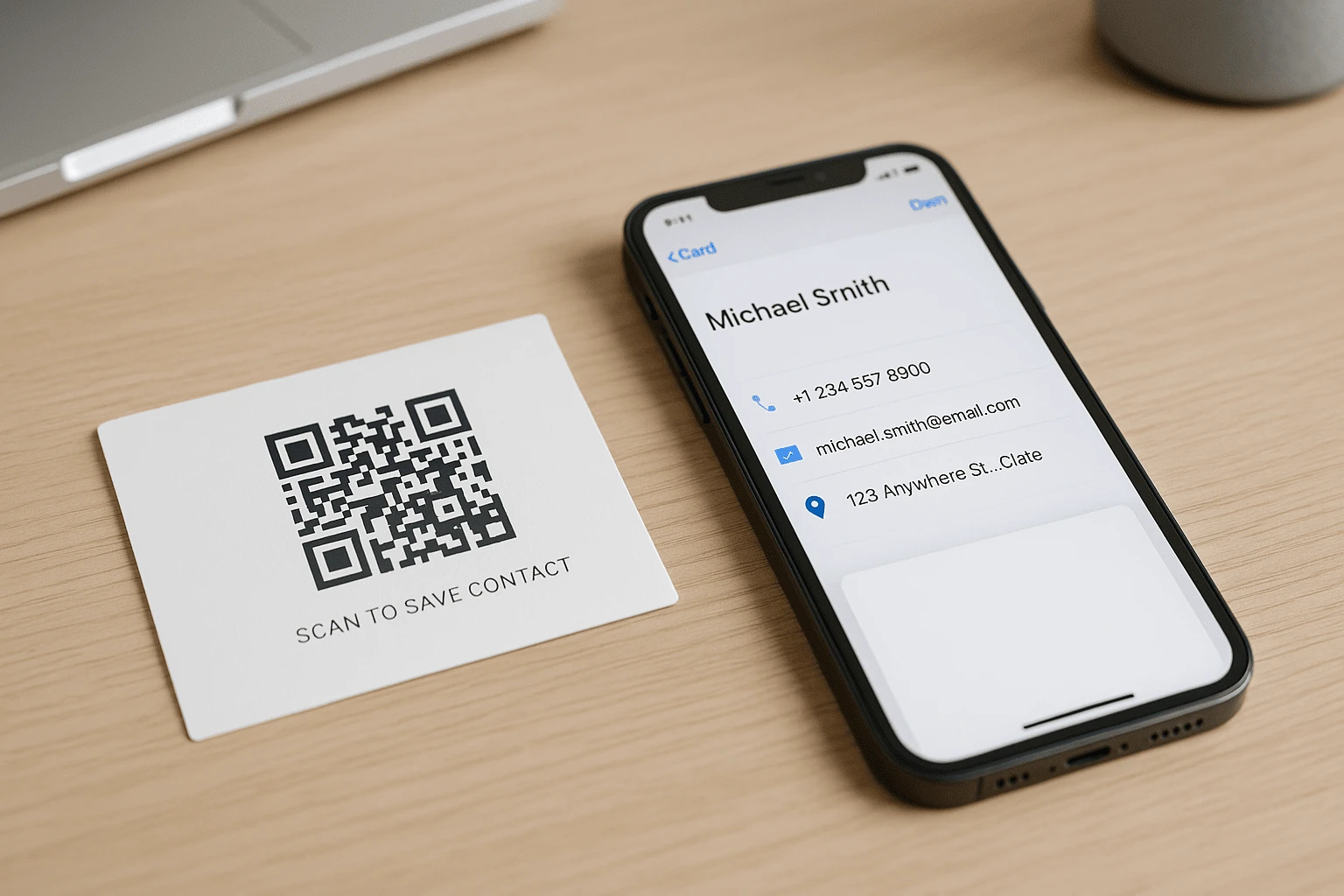
Business Card QR Code: How to Create a Digital vCard for Faster Contact Exchange
A business card with a QR code is a simple, modern way to share contact details without asking someone to type your phone number, email, or social links by hand. They scan the code with a smartphone camera, see your details in a structured format, and can save the contact to their address book right away. It is especially useful at meetings, presentations, conferences, trade shows, and networking events where contact exchange has to be quick and nothing should get lost after the conversation.
A QR business card works on modern smartphones and usually does not require a separate app. You can create one in minutes with our vCard QR code generator, add the key contact fields, customize the appearance, download the finished code, and use it across both digital channels and printed materials.
This format is not limited to a classic paper business card. You can place the QR code in a PDF resume, email signature, presentation, badge, sales proposal, or social media profile. For a wider view, see our guides on using QR codes in marketing and how they support personal branding for freelancers.
What is a vCard QR code?
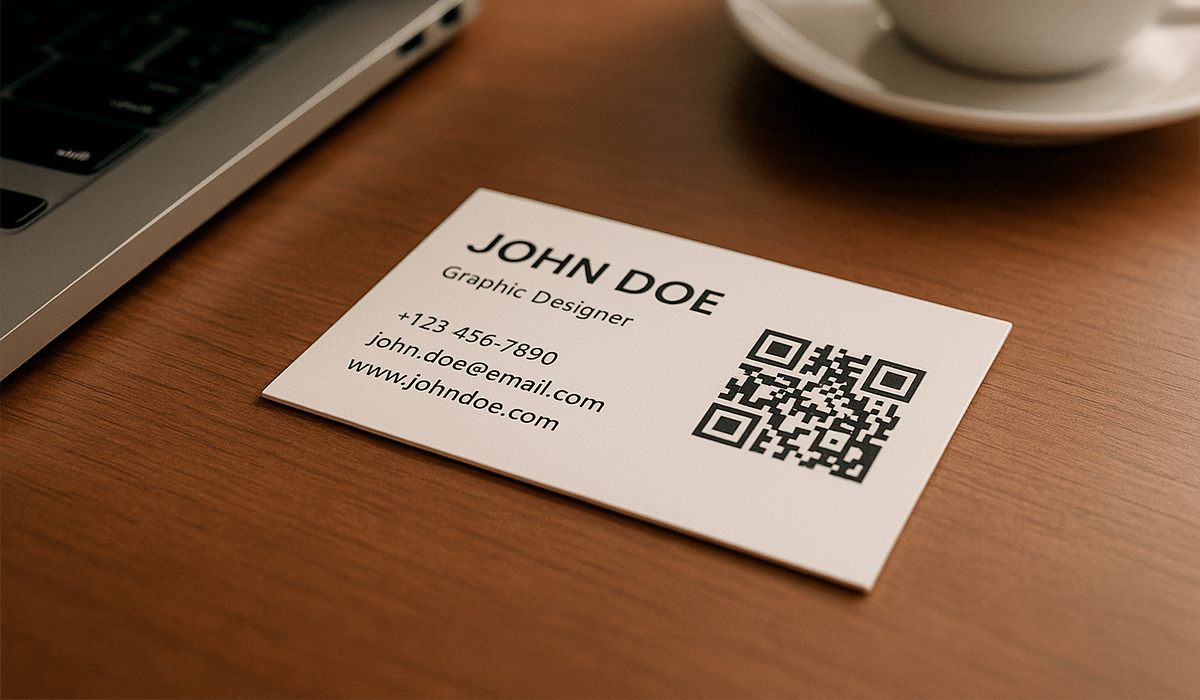
A vCard QR code is a type of QR code that stores contact information as a digital business card. After scanning it, a smartphone recognizes the data and suggests adding a new contact to the address book. That contact can include a name, phone number, email, company, job title, website, address, and social media links.
If you have ever copied details from a paper business card into your phone manually, you know how easy it is to mistype a digit, miss a character in an email address, or forget where you saved the contact. A vCard QR removes that extra step: the person scans the code, checks the details, and saves them to the phone in a few seconds.
This type of QR code is well suited for business cards, badges, banners, flyers, and catalogs. It also works in digital environments: for example, in an email signature, PDF presentation, resume, or on a personal website.
On FbFast, you can create this code without complex setup: open the vCard generator, fill in the fields you need, review the data, and download the finished QR code in a convenient format.
What is the vCard format and how does a .vcf file work?
vCard, short for Virtual Contact File, is a widely used standard for digital business cards. It stores contact details in a file with the .vcf extension. Smartphones, email services, address books, many CRM systems, and desktop contact apps support this format.
This is the format behind the vCard QR codes you can create on FbFast. When a smartphone reads this kind of code, it sees more than plain text: it recognizes structured contact fields such as name, phone, email, website, address, company, and more. As a result, the user does not copy anything manually; they save a ready-to-use contact.
A .vcf file can also be sent as an email attachment, added to an email signature, or used to move contacts between a phone and a computer. In business, this format is useful for CRMs, customer databases, recruiting, support, and sales because it standardizes contact data and reduces mistakes when information is passed from one person to another.
If you need more than showing a phone number inside an image, a vCard QR code gives better results. It does not just display the data; it helps the smartphone understand it as a contact that can be saved, updated, or used for further communication.
What information can you add to a vCard QR code?
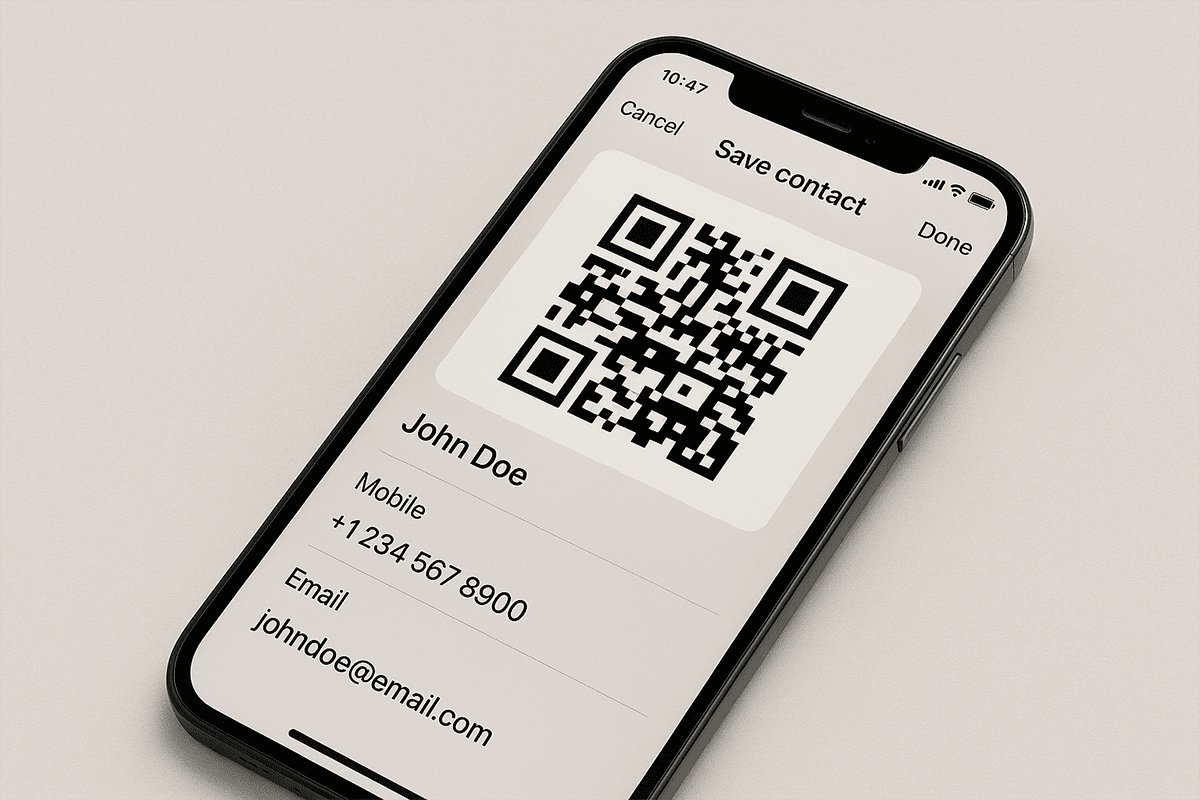
When creating a QR business card, you decide which details to show. The vCard format lets you add more than a name and phone number: it can present you as a specialist, company representative, or business owner. That matters because first contact is often brief: someone scans the code, sees your details, and immediately understands who you are, what you do, and how to reach you.
Most vCard QR codes include a first and last name, mobile or work phone, email, company name, job title, website, and office or studio address. You can also add links to a portfolio, social profiles, or professional pages such as Instagram or LinkedIn. Some users only need the basics: name and phone number. For a business or freelancer, it is often better to add a website, social profile, and a short indication of the company or area of work.
This setup is especially useful for professionals who work directly with clients: designers, marketers, SMM managers, photographers, consultants, real estate agents, teachers, and freelancers. For example, a QR business card with a portfolio link lets you leave contact details and immediately show work samples, case studies, or service examples.
The key is not to overload the contact with unnecessary information. A QR business card should help the person quickly understand who you are and how to contact you. Add the fields that support the next action: a call, email, website visit, portfolio review, or saving your contact for future cooperation.
How to create a business card QR code on FbFast
You can create a QR business card on FbFast in just a few minutes. The tool works for a simple one-time code that you need to add quickly to a business card layout, as well as for a full digital business card with design, editing, and analytics. The right option depends on how you plan to use the QR code: for a personal contact, print, a team, an event, a presentation, or ongoing business communication.
Create one for free without registration
- Go to the vCard QR code generator page. The public page is open to everyone, so you can start without creating an account.
- Fill in the contact fields: name, phone number, email, website, social profiles, company, job title, or address. You choose which details should be included in the code.
- Review the information before downloading. A static QR code stores the entered contact data directly inside the image, so it is important to confirm that the phone number, email, and links are correct from the start.
- Download the QR code as PNG, PDF, or SVG and place it in your business card, resume, presentation, badge, or other material.
This option works well when you need to create a digital business card quickly for a trade show, meeting, CV, email signature, or personal website. The public version includes basic settings that are enough for simple contact exchange, while branded design, post-publication editing, and scan statistics are better handled through the expanded account features.
Advanced options after registration
If you need more control over the look and behavior of the QR code, create an account. It unlocks extra options: add a logo, change the dot shape, choose colors, use a frame, adjust the background, and make the code feel closer to your brand.
Dynamic QR codes are especially useful for business and active networking. They let you update contact details without replacing the QR image itself. For example, if your phone number, email, job title, website, or portfolio link changes, you do not have to reprint your business cards; you simply edit the information in your account.
Analytics can also matter when a QR business card is used at events, in presentations, commercial materials, or recruiting. You can see how many times the code was scanned, which devices were used, and under which conditions it performs better. This helps evaluate offline materials and understand which channels actually lead to contact.
For example, a freelance designer can print one QR code on a business card and later update links to a portfolio, Instagram, or website without another print run. A company can create branded QR business cards for the team and update an employee's job title or department in the account without reissuing every material.
You choose the workflow: a simple free QR code for quick contact exchange, or a dynamic QR business card with design, analytics, and editing. For short-term use, the basic option is enough. For print, brand materials, and teams, it is better to plan for future updates from the beginning.
How to update contact information without reissuing the QR code
If you use a static QR code, all data - phone number, email, website, social profiles, and job title - is stored directly inside the code. That means once your contact information changes, the old code is no longer fully accurate. To fix the details, you have to create a new QR code and replace it everywhere it was used.
For paper business cards, catalogs, brochures, packaging, or banners, this can become a real problem. Even a small change, such as a new phone number or an updated website domain, forces you to review layouts and print materials again. That is why dynamic QR codes are worth considering for long-term use.
A dynamic QR code created through your account on FbFast works differently. The QR image stays the same, while the contact data can be edited in the account. Changed your number? Update the field in the editor. Do not want to show an email temporarily? Remove it from the data. Moved to another company or updated your job title? Change the information without reprinting the card.
This is especially convenient for professionals whose contacts or links change from time to time: freelancers, consultants, sales managers, recruiters, service company representatives, and small businesses. It is also useful for teams that need one consistent QR business card template while regularly updating details for individual employees.
Beyond editing, the dynamic format gives access to scan statistics. This helps you understand whether the QR code works at a trade show, in an email signature, during a presentation, or inside a printed piece. For networking, HR, marketing, and B2B communication, that insight can be just as important as the saved contact itself.
Benefits of QR business cards for personal and business communication
Digital business cards with QR codes are more than a convenient replacement for paper cards. They save time, reduce mistakes, strengthen professional perception, and open up new ways to interact. When a contact can be saved in one scan, the person is more likely to return to you after a meeting, event, or material review.
Fast contact saving without mistakes
A QR business card removes the awkward moments when you have to dictate a number, repeat an email address, or ask someone to search for a social profile among similar names. The person scans the code and sees the details in a structured format. This is especially valuable at conferences, trade shows, and business meetings where contact exchange happens quickly and there is almost no time for manual entry.
A professional image and a modern introduction
A business card with a QR code signals digital fluency and attention to the other person's convenience. It shows that you are not merely handing over contact details; you are making the next step as easy as possible. For a business, this becomes part of the customer experience. For an individual specialist, it supports personal branding. You can find more ideas in our guide to using QR codes in business and marketing.
Editing without another print run
A dynamic QR code lets you change a phone number, email, website, or link at any moment without printing new business cards. This is flexible and practical, especially when the code appears on materials that are difficult to replace quickly. We explain the difference in more detail in our article on static and dynamic QR codes.
Branded design and recognition
A QR code does not have to look like a technical black square without context. You can style it for your brand: add a logo, choose colors, use a frame, adjust the dot shape, and match the visual style of your materials. This way, the QR business card works not only as a contact tool but also as part of your visual identity. Practical tips are available in our guide on how to create a branded QR code.
Analytics for events, recruiting, and marketing
If a QR business card is used at important touchpoints, analytics helps you understand how it performs. Dynamic QR codes can show the number of scans, devices, countries, and other data useful for evaluating results. This makes sense for trade shows, conferences, HR events, partner meetings, and campaigns where you need not only to share a contact but also to measure audience interest. Read more in our article on QR code analytics.
Where a QR business card works best
A QR business card is more than a modern alternative to a paper card. It unlocks more use cases that used to be inconvenient or technically awkward. You can show it on a screen, print it on a physical material, insert it into a PDF, or send it in an email. In every case, the goal is the same: shorten the path from introduction to saved contact.
Public talks, conferences, and training sessions
A speaker, host, or trainer can show a QR business card on a slide, screen, banner, or booth. The audience scans the code and saves the contact without exchanging paper materials. This is especially convenient when the room is full and there is no time for individual business card exchange after the talk. The QR code can also stay on the final presentation slide together with a clear invitation to get in touch after the event.
Recruiting, career fairs, and HR events
HR managers and recruiters can place a QR business card on a company booth, badge, flyer, or vacancy presentation. A candidate scans the code and instantly saves a phone number, email, career page, or the recruiter's LinkedIn profile. This shortens conversations, reduces queues near the booth, and helps keep the contact after the event.
Freelancers, designers, photographers, and consultants
For freelancers, a QR business card can be more than a contact; it can be a direct path to a portfolio. For example, a photographer at an event can hand out a card with a QR code leading to Instagram, a website, or a curated work selection. A designer, copywriter, or marketer can add links to case studies, a LinkedIn profile, or a service request form. More examples are covered in our article about QR codes for freelancers.
Small businesses and service providers
If you run a shop, salon, studio, clinic, showroom, or local service, a QR business card can live on the counter, packaging, flyer, receipt, or waiting area display. A customer scans it and saves a booking phone number, social profiles, address, website, or manager contact. This improves the chance of a repeat visit because the person does not have to search for you again after leaving.
Digital communication and online meetings
In virtual meetings, you can show a QR business card on screen, add it to a presentation, or send it as an image in a messenger. The person scans it from another device's screen or opens the link if it is placed nearby. This approach works for online consultations, education, technical support, sales, and any work where the introduction happens remotely.
In practice, there are many more scenarios: email signatures, LinkedIn profiles, PDF catalogs, sales proposals, packaging, gift cards, and even video presentations. In each of them, a QR business card removes extra steps and helps create a professional impression before the first email or call.
QR business cards in B2B communication
In a corporate environment, a QR business card is not just a convenient way to exchange contacts; it is part of a systematic approach to communication. Businesses interact with customers, partners, suppliers, and candidates through presentations, sales proposals, trade shows, emails, and information materials. At each of these touchpoints, a QR code can shorten the path to contact and make communication more precise.
Adding QR contacts to proposals and presentations
In B2B, first impressions matter. When you send a presentation or PDF proposal to a partner, a QR code with the contact details of a manager, sales department, or project team adds a useful layer of convenience. The recipient does not need to search for a phone number in an email, copy an address, or manually transfer details from the document; the contact can be saved immediately.
This matters even more when several people are involved on the company side. Each manager can have a personal QR code with a job title, corporate email, phone number, and LinkedIn profile. If the project, department, or area of responsibility changes, a dynamic QR code allows the information to be updated without changing the whole document.
Booths, trade shows, and conferences
At events, there is often no time for a long contact exchange. A QR business card on a badge, booth, flyer, or presentation material lets someone save the contact to a smartphone instantly. It lowers the risk of losing information after the event and simplifies follow-up because the contact is already in the phone of a potential customer or partner.
Companies can create one branded QR business card template for the whole team. A logo, brand colors, job title, website, and consistent visual style help standardize communication. This is especially useful at international exhibitions, industry conferences, and partner events where the brand needs to feel consistent in every detail.
Brochures, catalogs, and information packs
In manufacturing, distribution, services, consulting, and many other industries, contact information often appears in printed materials: technical catalogs, proposals, brochures, welcome packs, or instructions. A QR code lets people save up-to-date contacts even months after receiving the material.
If contacts change, a dynamic QR code helps update the information without reissuing the entire batch of materials. This is especially valuable for multi-page publications, expensive print runs, or documents shared with partners for long-term use.
Email communication and support
In corporate email, a QR business card in a manager's signature lets a client or partner quickly save the contact and continue the conversation through the most convenient channel: phone, messenger, email, or CRM. It is useful for support teams, post-sale service, partner programs, consulting, and technical teams.
For companies in sales, service, distribution, recruiting, or technical support, QR business cards can become part of the communication infrastructure. They save time, reduce mistakes, standardize contact sharing, and shape the image of a company that cares about customer convenience.
This approach works best when combined with dynamic QR codes, which can be updated, adapted to new projects, designed in a unified style, and analyzed through scan statistics.
How to use a QR business card in LinkedIn, a CV, and an email signature
A QR business card is not only for paper. It fits easily into digital channels used every day in B2B communication, recruiting, freelancing, and personal branding. When the QR code is present in a profile, resume, or signature, a person can save your contact at the exact moment they are already interested in you or your offer.
Adding a QR business card to LinkedIn
On LinkedIn, you can use a QR code as an image in a post after a conference, add it to featured content, or place it inside a visual profile asset. This makes sense if you actively meet new people, look for clients, hire specialists, or build a personal brand. Next to the QR code, briefly explain what someone gets after scanning: a contact, portfolio, website, call-booking calendar, or company profile.
For LinkedIn, the visual should stay clean. The QR code needs to be large enough to scan, have a clear caption, and not disappear among other design elements. If you use a dynamic code, you can adjust the target information by campaign: after an event, point it to a manager's contact; during a job search, to a resume; while promoting services, to a portfolio or website.
Adding a QR code to a resume or CV
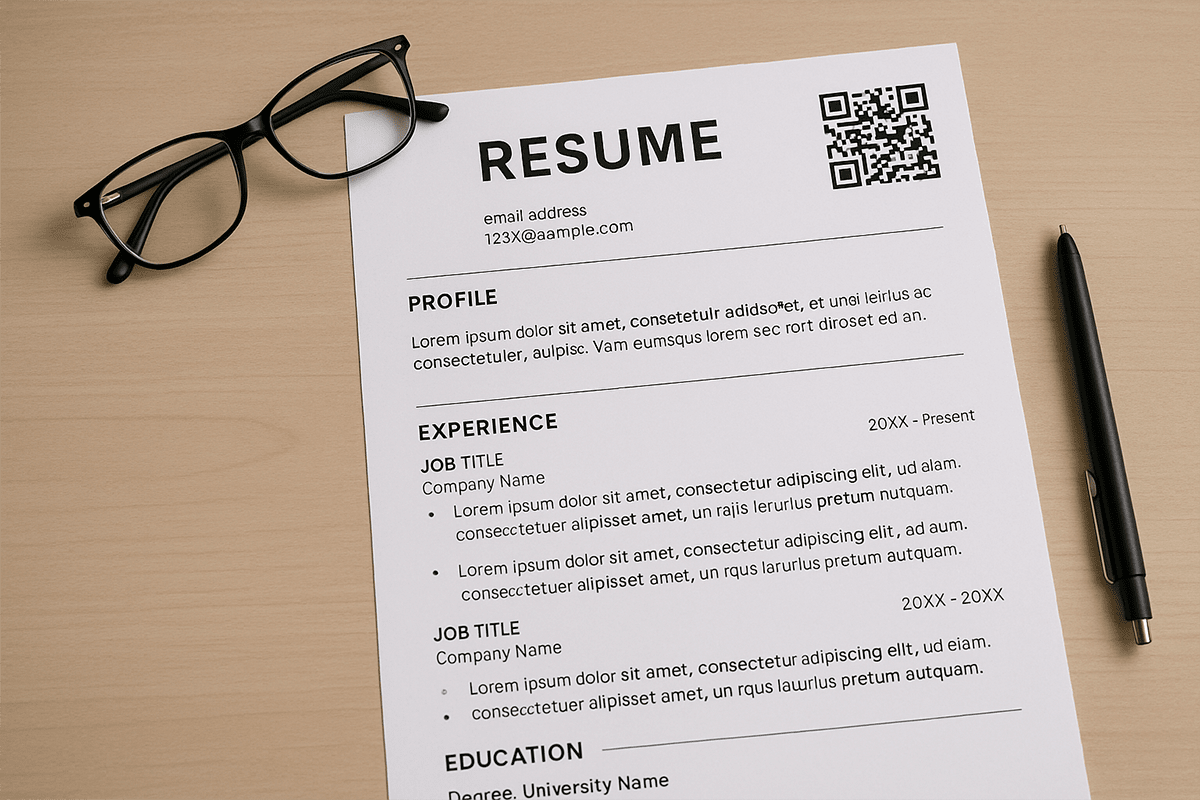
For a resume, it is convenient to download the QR code as SVG or PNG and place it in the header of the PDF next to your name, photo, or contact details. A recruiter can scan the code and immediately save your contact, visit your website, open your portfolio, go to LinkedIn, or view a page with case studies.
This is especially useful for designers, marketers, developers, photographers, copywriters, and specialists whose work should be seen right away. Instead of placing several long links in a resume, you can provide one clear QR code with a short caption. For example: "Save contact and view portfolio".
QR business card in an email signature
In Gmail, Outlook, or another email client, you can add a QR code to your signature next to your name, job title, phone number, and website. A simple signature works best: a short phrase such as "Save contact" and the QR image next to it or below it. This gives the recipient a quick way to add you to their phone book even after a short email exchange.
If you use a dynamic QR code, the email signature becomes even more useful. You can update details without changing every email template and also estimate how many people scan the code specifically from email communication. For sales, support, partnerships, and consulting, this helps you understand which contact points actually work.
A digital business card should not live only on paper. Its strength is that it can appear in almost every interaction with you: social profiles, email, PDF documents, presentations, video meetings, or your website. The shorter the path from introduction to saved contact, the lower the chance that someone loses your details or postpones getting in touch.
Summary: why add a QR code to a business card?
A QR code on a business card is not just a convenient detail; it is a practical tool for personal and business communication. It helps share contact details without mistakes, reinforces professionalism, brings the classic business card into a digital environment, and reduces reliance on manual data entry.
Whether you are a specialist, entrepreneur, freelancer, recruiter, or company representative, a digital business card with a QR code helps you establish contact faster and more conveniently. It works offline and online: in a presentation, email signature, LinkedIn profile, PDF resume, booth, badge, package, or screen during a talk.
You can start with a simple format: create your first QR business card in the FbFast generator, add the core contact details, and download the finished code. If you need design, editing, analytics, or control over data after printing, move to a dynamic QR code in your account.
A business card QR code works best when it does more than decorate the layout. It should help the person take the next step: save your contact, visit your website, view your portfolio, or message you right after the introduction. That is its main value: a convenient bridge between the first contact and real communication.